Leave Your Message
-
Phone
-
E-mail
-
Whatsapp

Choosing Nail Gel Polish can reshape a salon’s daily service, but the decision requires more than attractive color displays. Clients often expect glossy nails, smooth application, and wear that survives typing, washing, and busy schedules. For business owners, these expectations can support repeat appointments, stronger retail opportunities, and a more consistent service menu.
Doug Schoon, a respected nail product chemist and educator, states, “The product is not the problem; the improper use of the product is the problem.” His point deserves careful attention. Professional results depend on correct preparation, controlled curing, suitable lamp compatibility, and proper removal. A beautiful bottle cannot replace trained technique.
Nail Gel Polish can also improve workflow when technicians understand the system. Thin, even layers reduce flooding near the cuticle. A properly shaped brush can make detailed application feel more precise. Clean tools and clear service records help maintain client trust. Small details matter.
Still, gel polish is not perfect. Some products may chip when preparation is rushed. Some clients may dislike removal time or lamp exposure. Business owners must evaluate ingredient information, supplier reliability, training support, and client needs before switching systems. A lower purchase price may create higher costs through rework, waste, or unhappy customers.
This article examines why Nail Gel Polish remains valuable for modern salons. It considers service quality, operational efficiency, customer experience, and responsible professional practice. The goal is not to promise effortless success. It is to show where gel polish can help, where it may disappoint, and how informed decisions build a more reliable business.
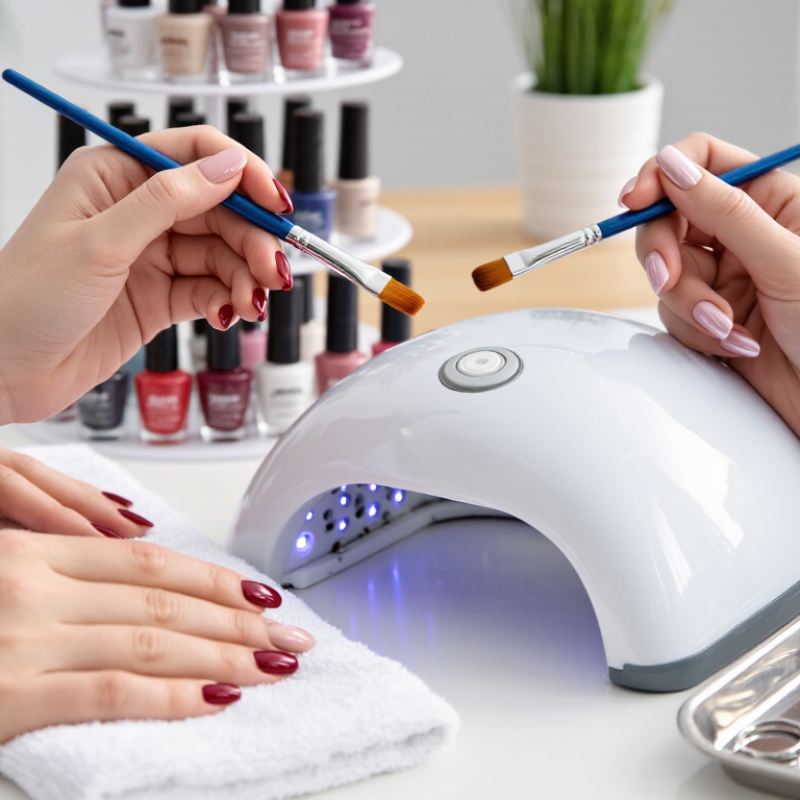
Nail gel polish is a light-cured coating, not a traditional air-drying lacquer. Its formula commonly contains oligomers, reactive monomers, pigments, solvents, and photoinitiators. Photoinitiators react under UV or LED light, creating a hard polymer film on the nail surface.
Most salon lamps use wavelengths around 365–405 nanometres. Cure time varies with lamp power, layer thickness, pigmentation, and formula design. A thin base layer may cure quickly, while dark colors often need careful, longer exposure. Gel polish usually offers glossy wear for about two to three weeks when applied correctly. However, removal still depends on controlled soaking and gentle filing. Aggressive peeling can damage the natural nail plate.
Grand View Research reported that the global nail polish market was valued at approximately 14.48 billion dollars in 2023. The report projects continued growth through 2030, supported by salon services and at-home nail care. This creates a practical business opportunity, but product knowledge matters more than fast application. I have seen curing errors create soft, wrinkled surfaces. It is easy to blame the product, yet preparation and lamp compatibility may be the real issue.
Tips: Apply thin, even coats. Keep gel away from the skin. Check the lamp’s wavelength and curing guidance. Record lifting, chipping, and removal feedback from clients. Small notes can improve future service decisions.
| Business and Technical Dimension | Nail Gel Polish Characteristics | Typical Data or Process Range | Salon Application Benefit |
|---|---|---|---|
| Product Definition | A liquid coating system that forms a hard, glossy film after exposure to ultraviolet or visible violet light. | Usually applied as a base coat, color coat, and top coat system. | Provides a durable manicure service with a consistent, high-shine finish. |
| Core Formula | Commonly contains reactive monomers and oligomers, pigments, photoinitiators, additives, and volatile or low-volatility solvents. | The exact formulation varies by product and intended use; professional products should include ingredient and curing instructions. | Formulation flexibility supports sheer colors, opaque shades, glitter finishes, builder-style overlays, and specialty effects. |
| How Curing Works | Light activates photoinitiators, which start polymerization and convert the liquid coating into a cross-linked solid film. | Curing depends on lamp wavelength, lamp output, layer thickness, product chemistry, and exposure time. | Fast, repeatable curing helps reduce drying-related smudging and improves service workflow. |
| Typical Lamp Compatibility | Many professional formulas are designed for LED, UV, or dual-wavelength lamps, but compatibility is product-specific. | Common lamp ranges include approximately 365 nm for UV and approximately 395–405 nm for many LED systems. | Using the lamp specified for the formula helps reduce under-curing, lifting, and service failures. |
| Typical Curing Time | Each thin layer is cured separately rather than allowing the entire manicure to air-dry. | Often about 30–60 seconds under a compatible LED lamp or about 120 seconds under a traditional UV lamp; always follow the product instructions. | Short curing cycles can increase appointment capacity without sacrificing finish quality when the system is used correctly. |
| Recommended Layer Thickness | Thin, even coats generally cure more reliably than thick coats. | Usually one base layer, two thin color layers, and one top layer, with curing after each layer. | Thin application improves leveling, color consistency, curing reliability, and control around the cuticle area. |
| Surface Finish | Creates a smooth film with high gloss, although matte and specialty top coats are also available. | Gloss typically remains visible throughout the service period when the coating is properly applied and protected. | Premium-looking results can support upgraded manicure packages and add-on services. |
| Typical Wear Period | Generally offers longer wear than conventional air-dry nail polish when applied to properly prepared nails. | Approximately 2–3 weeks is common, depending on nail growth, preparation, lifestyle, product system, and aftercare. | Longer-lasting results can increase customer satisfaction and encourage planned maintenance appointments. |
| Removal Method | Many soak-off formulas can be removed after the surface is gently filed to break the top seal. | Acetone soaking commonly takes about 10–15 minutes, although time varies with thickness and formula. | A defined removal protocol helps reduce aggressive scraping and supports healthier natural-nail services. |
| Salon Service Applications | Suitable for standard manicures, pedicures, nail art, French designs, overlays, repairs, and short extensions when the system permits. | Can be used for both natural-nail services and selected enhancement techniques. | One product category can support multiple service menus and different customer preferences. |
| Operational Efficiency | Controlled curing replaces the long air-drying period associated with traditional polish. | Clients can generally use their hands immediately after the final cure, provided the service is complete and the coating is fully cured. | Reduces accidental dents and may make scheduling more predictable during busy periods. |
| Quality-Control Factors | Results depend on nail preparation, product compatibility, lamp condition, coat thickness, curing time, and application technique. | Common service issues include lifting, wrinkling, shrinking, tacky surfaces, and premature chipping. | Standardized procedures and regular lamp checks can improve consistency and reduce rework. |
| Professional Safety Practice | Uncured product should be kept off the surrounding skin, and adequate ventilation and hygiene procedures should be maintained. | Follow the manufacturer’s safety data, curing instructions, sanitation requirements, and local salon regulations. | Careful handling supports client comfort, staff safety, and a more professional service environment. |
| Best Business Fit | Well suited to salons seeking durable color services, faster turnaround, repeat appointments, and a broad design offering. | Particularly useful for customers who value shine, chip resistance, and reduced post-service drying time. | Creates opportunities for recurring maintenance services, nail art upgrades, and tiered treatment packages. |